Hey there! As a supplier of NBR gloves, I often get asked about the elongation at break of these gloves. So, let's dive right into it and figure out what this term means and why it's super important when it comes to NBR gloves.
First off, what exactly is elongation at break? Well, it's a measure of how much a material can stretch before it actually breaks. In the case of NBR gloves, it tells us how far we can pull the glove before it tears apart. You can think of it like a rubber band. If you stretch a rubber band gently, it gets longer. But if you stretch it too much, it snaps. The same principle applies to NBR gloves.


Elongation at break is usually expressed as a percentage. For example, if a glove has an elongation at break of 300%, it means that the glove can stretch to three times its original length before it breaks. This is a crucial property because it gives us an idea of the glove's flexibility and durability.
Now, why is elongation at break so important for NBR gloves? Well, in many work environments, gloves need to be able to stretch and move with your hands without tearing. Whether you're working in construction, manufacturing, or even in a laboratory, you need gloves that can handle the stresses and strains of your job. Gloves with a high elongation at break are more likely to withstand these forces and last longer.
Let's say you're working on a construction site. You're handling heavy materials, moving equipment around, and your hands are constantly in motion. If you're wearing gloves with a low elongation at break, they're more likely to tear when you make a sudden movement or apply a lot of force. On the other hand, gloves with a high elongation at break can stretch and adapt to your movements, reducing the risk of tears and providing better protection.
Another reason why elongation at break is important is comfort. Gloves that can stretch easily are more comfortable to wear because they don't restrict your movement. You can perform tasks more freely without feeling like your hands are being constricted. This is especially important for jobs that require fine motor skills, like working with small parts or operating delicate equipment.
So, how do we measure the elongation at break of NBR gloves? Well, it's a pretty standard test. A sample of the glove material is cut into a specific shape, usually a dumbbell shape. Then, the sample is placed in a machine that slowly pulls it apart at a constant speed. The machine measures the force applied and the amount of stretch until the sample breaks. The elongation at break is then calculated as a percentage of the original length.
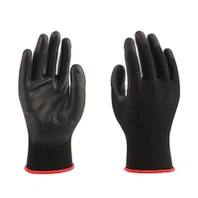
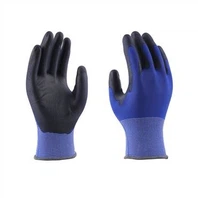
Now, let's talk about the different types of NBR gloves we offer and how their elongation at break can vary. We have Fully Nitrile Coated Gloves (Knitted Wrist). These gloves are fully coated with nitrile, which provides excellent chemical resistance and durability. They typically have a high elongation at break, making them suitable for a wide range of applications. Whether you're working with chemicals, handling sharp objects, or just need a tough pair of gloves, these are a great choice.
Our Nitrile Coated Knitted Gloves are another popular option. The knitted wrist provides a comfortable fit, while the nitrile coating offers protection against abrasion and chemicals. These gloves also have a good elongation at break, allowing for flexibility and ease of movement. They're perfect for jobs that require a combination of dexterity and protection, like assembly work or maintenance tasks.
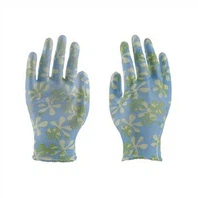
And then we have Nitrile Coated Cotton Gloves. The cotton base provides a soft and breathable feel, while the nitrile coating adds durability and chemical resistance. These gloves have a decent elongation at break, making them suitable for light to medium-duty tasks. They're great for jobs where you need to keep your hands cool and comfortable, like gardening or light cleaning.
When it comes to choosing the right NBR gloves for your needs, it's important to consider the elongation at break along with other factors like chemical resistance, abrasion resistance, and grip. Different jobs require different levels of protection and flexibility, so it's important to find the gloves that are the best fit for your specific situation.
If you're in the market for NBR gloves and want to learn more about our products, or if you have any questions about elongation at break or any other properties of our gloves, don't hesitate to reach out. We're here to help you find the perfect gloves for your needs and ensure that you have the protection and comfort you deserve.
In conclusion, elongation at break is a crucial property of NBR gloves that determines their flexibility, durability, and comfort. By understanding this concept and choosing gloves with the right elongation at break for your job, you can ensure that you have the best possible protection and performance. So, if you're looking for high-quality NBR gloves, give us a shout and let's start the conversation!
References:
- ASTM D412 - Standard Test Methods for Vulcanized Rubber and Thermoplastic Elastomers - Tension
- ISO 37 - Rubber, vulcanized or thermoplastic - Determination of tensile stress - strain properties