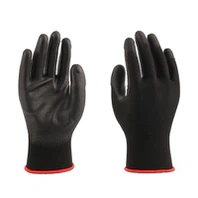
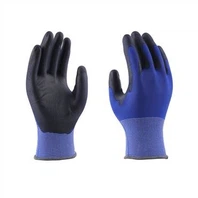
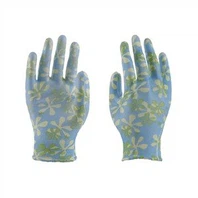
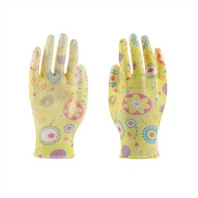
Hey there! As a supplier of PVC coated gloves, I often get asked how to tell if these gloves fit well. Well, it's not as straightforward as you might think, but I'm here to break it down for you.
First off, let's talk about why a good fit matters. When gloves fit properly, they offer better protection. Whether you're working in construction, handling chemicals, or doing some DIY at home, a well - fitting glove can prevent accidents. A glove that's too loose might slip off when you're in the middle of a task, leaving your hands vulnerable. On the other hand, a glove that's too tight can restrict movement, causing fatigue and potentially leading to mistakes.
One of the easiest ways to check the fit is by looking at the length. The glove should cover your wrist comfortably. If it stops short, your wrist is exposed, and that's a no - go. For most people, a glove that reaches just below the base of the thumb on the wrist area is a good length. But if you're doing work that requires extra protection, like handling sharp objects or working in a hazardous environment, you might want a glove that goes a bit higher up the forearm.
Now, let's move on to the width. You can start by looking at the palm area. When you put on the glove, there shouldn't be any bunching or excessive wrinkling. If there are a lot of wrinkles, it means the glove is too wide. On the flip side, if you can feel the material stretching tightly across your palm and it's hard to make a fist, then the glove is too narrow.
The fingers are another crucial part. Each finger should fit snugly inside its compartment. There should be a little bit of space at the tip, but not so much that your finger can move around freely. If your fingers feel cramped, it's a sign that the glove is too small. And if there's a lot of extra material at the fingertips, it can be a nuisance as it might get in the way when you're trying to pick up small objects.


To get a more accurate fit, you can measure your hand. Use a flexible measuring tape and wrap it around the widest part of your palm, just below your knuckles. Make sure the tape is not too tight or too loose. Then, refer to the size chart provided by the glove manufacturer. Most of the time, these charts are pretty accurate, but keep in mind that different brands might have slightly different sizing.
Another thing to consider is the stretch of the glove. PVC coated gloves usually have some degree of stretch, which can affect the fit. A good glove should stretch enough to allow for easy movement but still maintain its shape. You can test the stretch by putting on the glove and making a few fist movements. If the glove loses its shape or becomes baggy after a few movements, it might not be a good quality glove or the fit might not be right.
Now, let's talk about the different types of PVC coated gloves and how the fit might vary. There are gloves designed for different purposes, like Cut Resistant Leather Gloves. These gloves are often used in industries where there's a high risk of cuts, such as metalworking or glass handling. For these gloves, a tight fit is especially important to ensure maximum cut resistance.
Sandy Nitrile Cut Resistant Gloves are another type. They offer a good balance between cut resistance and grip. The fit of these gloves should be snug enough to provide a good grip on objects but still allow for flexibility.
ESD Dotted Gloves are used in industries where electrostatic discharge is a concern, like electronics manufacturing. These gloves need to fit well to prevent any static build - up. A loose glove might not provide the necessary grounding, while a too - tight glove can cause discomfort and potentially damage the ESD properties.
When you're trying on gloves, don't just put them on and look at them. Actually do some tasks with them. If you're a mechanic, try picking up some tools. If you're a painter, hold a paintbrush. This will give you a real - world feel of how the gloves fit and perform.
It's also important to consider the lining of the glove. Some PVC coated gloves have a fabric lining, which can affect the fit. A thick lining might make the glove feel tighter, while a thin lining might not provide enough comfort. So, take the lining into account when you're assessing the fit.
In addition to the physical fit, you should also think about how the glove feels over time. Some gloves might feel okay at first, but after a few hours of use, they can become uncomfortable. This could be due to factors like the material's breathability or the way it rubs against your skin. Look for gloves that are made from high - quality materials and have good ventilation.
If you're ordering gloves in bulk, it's a good idea to order a sample first. This way, you can test the fit and quality before making a large purchase. And if you have specific requirements, like a certain level of cut resistance or chemical protection, make sure to communicate that with the supplier.
As a PVC coated gloves supplier, I understand that finding the right fit is crucial for your business. Whether you're a small workshop or a large industrial company, having well - fitting gloves can improve productivity and safety. If you're interested in learning more about our PVC coated gloves or have any questions about fit, feel free to reach out. We're here to help you find the perfect gloves for your needs.
References
- General knowledge from years of experience in the PVC coated gloves industry.
- Various industry standards and guidelines for glove sizing and fit.