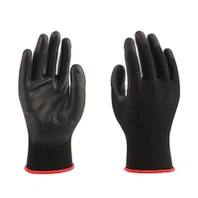
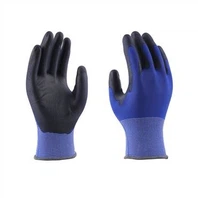
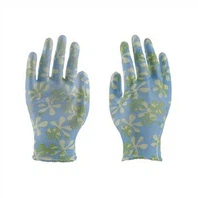
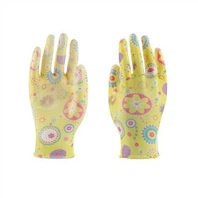
When it comes to industrial and work - related gloves, foam nitrile coated gloves have emerged as a popular choice due to their numerous benefits. One of the key aspects that users often consider is the stretchability of these gloves. In this blog, as a supplier of Foam Nitrile Coated Gloves, I will delve into the topic of whether foam nitrile coated gloves have good stretchability.

Understanding Foam Nitrile Coated Gloves
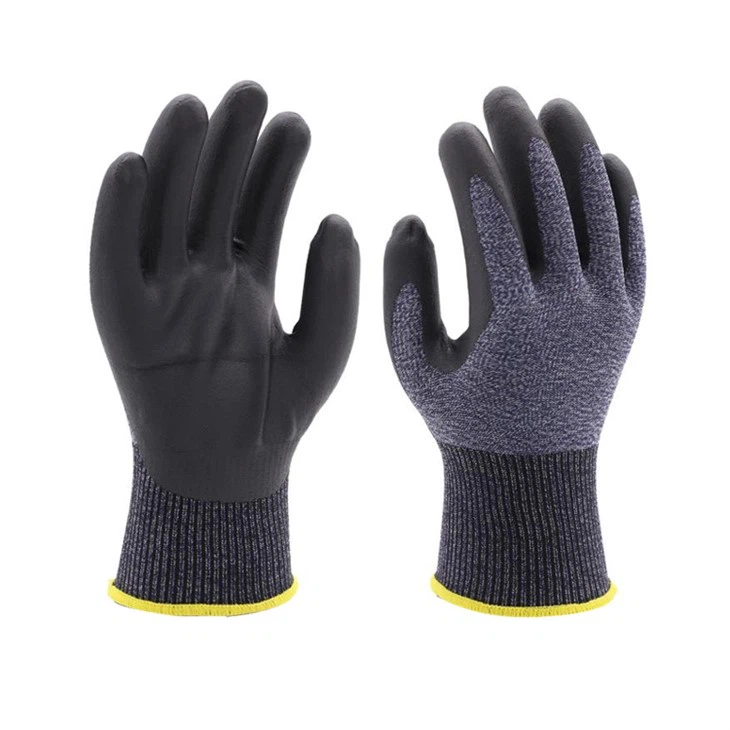
Before we discuss stretchability, it's important to understand what foam nitrile coated gloves are. These gloves typically feature a base glove made of materials like nylon or polyester, which is then coated with a layer of foam nitrile. The foam nitrile coating provides several advantages such as excellent grip, resistance to chemicals, and protection against abrasions.
The base glove material plays a crucial role in determining the overall characteristics of the glove. For instance, nylon is known for its strength and durability, while polyester offers good moisture - wicking properties. When combined with the foam nitrile coating, these base materials contribute to the glove's performance in different work environments.
Factors Affecting Stretchability
1. Base Glove Material
As mentioned earlier, the base glove material significantly impacts stretchability. Gloves with a base made of nylon blended with spandex, such as our Gray Nylon With Spandex Micro Foam Nitrile Coated Gloves, tend to have better stretchability. Spandex is a highly elastic fiber that can stretch up to several times its original length and then return to its original shape. This property allows the glove to conform to the hand's movements easily, providing a comfortable and snug fit.
On the other hand, gloves with a pure nylon or polyester base may have more limited stretchability. While these materials are strong and durable, they do not offer the same level of elasticity as spandex - blended materials. However, advancements in textile technology have led to the development of treated nylon and polyester that can provide some degree of stretch, but it is still not comparable to the stretch provided by spandex.
2. Foam Nitrile Coating Thickness
The thickness of the foam nitrile coating also affects stretchability. A thinner coating generally allows for more stretch because it is more flexible. Thicker coatings, while providing better protection against chemicals and abrasions, can restrict the glove's ability to stretch. Our Microfoam Nitrile Coated Gloves are designed with an optimized coating thickness to balance protection and stretchability. The microfoam structure of the coating provides a good level of protection while still allowing the glove to stretch adequately.
3. Manufacturing Process
The manufacturing process of foam nitrile coated gloves can influence stretchability. During the coating process, factors such as the temperature, curing time, and the application method of the nitrile foam can affect the final properties of the glove. For example, if the curing temperature is too high, it can cause the nitrile coating to become brittle, reducing its stretchability. Our manufacturing process is carefully calibrated to ensure that the foam nitrile coating adheres well to the base glove while maintaining its stretchability.
Measuring Stretchability
Stretchability can be measured in several ways. One common method is to measure the percentage of elongation at break. This measures how much the glove can stretch before it breaks. Another important metric is the elastic modulus, which indicates the glove's resistance to deformation. A lower elastic modulus means that the glove is more stretchable.
In laboratory tests, our foam nitrile coated gloves have shown excellent stretchability results. For example, our Water Flushed Microfoam Nitrile Coated Gloves have a high percentage of elongation at break, indicating that they can stretch significantly without tearing. This is crucial in work environments where workers need to perform tasks that require a wide range of hand movements.
Benefits of Good Stretchability
1. Comfort
Gloves with good stretchability provide a more comfortable fit. They can conform to the shape of the hand, reducing pressure points and allowing for a more natural range of motion. This is especially important for workers who need to wear gloves for long periods. A comfortable glove can reduce hand fatigue and improve productivity.
2. Dexterity
Stretchable gloves enhance dexterity. Workers can perform fine - motor tasks more easily because the glove moves with the hand rather than restricting its movement. This is essential in industries such as electronics manufacturing, where precise hand movements are required.
3. Fit for Different Hand Sizes
Good stretchability means that the gloves can fit a wider range of hand sizes. This reduces the need for a large inventory of different sizes, making it more convenient for employers to supply gloves to their workers.
Conclusion
In conclusion, foam nitrile coated gloves can have good stretchability, depending on several factors such as the base glove material, coating thickness, and manufacturing process. As a supplier, we are committed to producing gloves that offer a balance between stretchability, protection, and comfort. Our range of foam nitrile coated gloves, including Gray Nylon With Spandex Micro Foam Nitrile Coated Gloves, Microfoam Nitrile Coated Gloves, and Water Flushed Microfoam Nitrile Coated Gloves, are designed to meet the diverse needs of our customers.
If you are interested in purchasing high - quality foam nitrile coated gloves with excellent stretchability, please feel free to contact us for more information and to start a procurement discussion. We look forward to serving you and providing the best glove solutions for your work environment.
References
- ASTM International. (2023). Standard test methods for rubber properties in tension. ASTM D412 - 16a.
- ISO. (2022). ISO 37:2017 Rubber, vulcanized or thermoplastic — Determination of tensile stress - strain properties.