Can PU Palm Coated Gloves be used in cold weather?
As a supplier of PU palm coated gloves, I often get asked whether these gloves are suitable for use in cold weather. This is a crucial question, especially for industries and workers who operate in low - temperature environments. In this blog, I'll delve into the properties of PU palm coated gloves and analyze their performance in cold conditions.
Understanding PU Palm Coated Gloves
PU, or polyurethane, is a synthetic material widely used in glove manufacturing. When applied as a coating on the palm side of gloves, it offers several advantages. The PU coating enhances grip, providing a better hold on tools and objects, which is essential for tasks that require precision and dexterity. It also offers resistance to abrasion, oils, and some chemicals, making these gloves suitable for a variety of industries such as automotive, construction, and logistics.
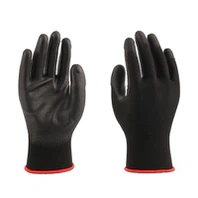
The base material of the glove, usually a knitted fabric like nylon or polyester, provides comfort and flexibility. The combination of the knitted base and the PU coating creates a glove that is both functional and comfortable to wear for extended periods. For example, our PU Coated Gloves - Black are designed with a high - quality knitted base and a durable PU coating, offering excellent performance in normal working conditions.


Performance in Cold Weather
- Insulation Properties
The insulation ability of PU palm coated gloves is a key factor when considering their use in cold weather. The knitted base material of the gloves can provide some level of insulation. However, compared to specialized cold - weather gloves made from materials like wool or thermal fabrics, the insulation of PU palm coated gloves is relatively limited.
In mild cold conditions, say temperatures above freezing point (0°C or 32°F), the knitted base can trap a small amount of air, which acts as an insulator. But as the temperature drops further, the effectiveness of this insulation diminishes. For instance, in temperatures around - 10°C (14°F), the heat loss through the glove will be significant, and the hands may start to feel cold quickly. - Flexibility and Dexterity
Cold weather can have an impact on the flexibility of the PU coating. At lower temperatures, the PU material can become stiffer. This stiffness can reduce the dexterity of the gloves, making it more difficult for workers to perform tasks that require fine motor skills. For example, tasks like handling small parts or operating delicate machinery may become challenging.
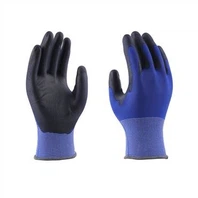
However, modern PU formulations are designed to have better cold - resistance. Some of our 13G CARBON FIBER ANTI - STATIC PU COATED GLOVES use advanced PU coatings that maintain a certain level of flexibility even in moderately cold conditions. But in extremely cold environments, the flexibility will still be affected to some extent. - Grip Performance
The grip provided by the PU coating is one of the main selling points of these gloves. In cold weather, the grip performance can be maintained to a certain degree. The PU material still adheres well to surfaces, allowing workers to hold tools and objects securely. However, if the gloves get wet (for example, from snow or ice), the grip may be compromised. Water can reduce the friction between the PU coating and the object, increasing the risk of slippage.
Strategies for Using PU Palm Coated Gloves in Cold Weather
- Layering
One effective strategy is to use the PU palm coated gloves as an outer layer over a pair of thin, insulating liner gloves. The liner gloves can provide additional warmth, while the PU palm coated gloves can still offer the necessary grip and protection. This combination allows workers to benefit from the insulation of the liner and the functionality of the PU - coated glove. - Selecting the Right Model
As mentioned earlier, some PU palm coated gloves are designed with better cold - resistance properties. When choosing gloves for cold - weather use, look for models that specifically mention cold - weather suitability. Our product range includes gloves that are engineered to perform well in a wider temperature range, providing a balance between warmth, flexibility, and grip. - Keeping Gloves Dry
To maintain the grip and performance of the gloves, it's important to keep them dry. Workers should avoid contact with water as much as possible. If the gloves do get wet, they should be dried thoroughly before reuse.
Conclusion
In conclusion, PU palm coated gloves can be used in cold weather, but with some limitations. In mild cold conditions, they can be a practical choice due to their grip and protection features. However, in extremely cold environments, additional measures such as layering and selecting the right model are necessary to ensure comfort and performance.
If you are looking for high - quality PU palm coated gloves that can perform well in various conditions, including cold weather, we have a wide range of products to meet your needs. Our Black PU Coated Gloves and other models are designed with the latest technology and materials to provide the best possible performance.
If you are interested in our products and would like to discuss your specific requirements for purchasing PU palm coated gloves, please feel free to contact us. We are always ready to assist you in finding the most suitable gloves for your work environment.
References
- "Hand Protection in Industrial Environments", Industrial Safety Handbook, 2020 Edition
- "Polyurethane Materials: Properties and Applications", Journal of Polymer Science, Vol. 35, 2018