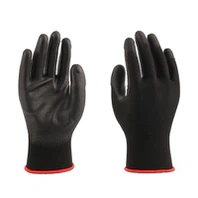
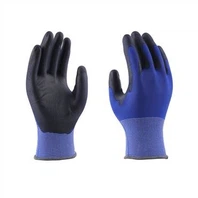
Well, folks, I'm a supplier of Pu Finger Coated Gloves, and I often get asked if these gloves can be used for welding in non - high - heat situations. Let's dig into this topic and find out the answer.
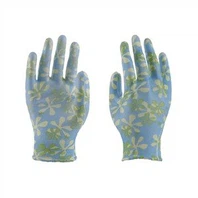
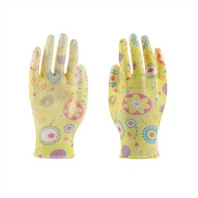
First off, we need to understand what Pu Finger Coated Gloves are. These gloves have a polyurethane (PU) coating on the fingers. The PU coating offers some great benefits. It provides good grip, is flexible, and is resistant to abrasion. You'll often see these gloves used in things like handling small parts in manufacturing, DIY projects around the house, and even in some aspects of gardening. You can check out our PU Gardening Gloves to get an idea of how versatile they can be.
Now, let's talk about welding. Welding is a process where you join materials, usually metals, by using heat. There are different types of welding processes, and they all generate heat. Some high - heat welding processes like arc welding can reach incredibly high temperatures, often well over a thousand degrees Celsius. But we're focusing on non - high - heat situations here. Non - high - heat welding could include some types of micro - welding or soldering, which typically operate at lower temperatures.
In non - high - heat welding, the main hazards aren't just the heat but also the sparks and the molten metal splatter. The heat might not be extreme, but those sparks can still land on your hands and cause burns or other injuries. So, can our Pu Finger Coated Gloves handle these?
The PU coating on the fingers is pretty resistant to some heat. It can withstand a certain amount of warm temperatures without degrading immediately. But it's not designed to handle direct exposure to the intense heat source in welding. Even in non - high - heat scenarios, the sparks can be super hot. A single spark landing on the PU coating can melt it. Once the coating starts to melt, it loses its integrity, and your hand protection is compromised.
Another thing to consider is the material of the base glove. Most Pu Finger Coated Gloves have a base material like nylon or cotton. Nylon starts to melt at around 215 - 260 degrees Celsius, and cotton can catch fire easily when exposed to high - enough heat or sparks. So, if the sparks from the non - high - heat welding process are hot enough, they can cause the base material to burn or melt.
Let me tell you about a situation I heard from a customer. He was doing some light soldering, thinking that his Pu Finger Coated Gloves would be sufficient. But a small spark landed on the finger of his glove. The PU coating started to melt right away, and it was a close call. He could have easily got a burn on his finger if he hadn't noticed it quickly.
There are also other factors to think about. In welding, gloves need to be resistant to chemicals used in the process. Some fluxes or welding gases can react with the PU coating, causing it to break down. And since welding often requires a good deal of dexterity to handle the welding tools properly, the gloves need to be flexible. While Pu Finger Coated Gloves are flexible, melting or chemical damage can make them stiff and less comfortable to use.
We do have some other glove options that might be more suitable for non - high - heat welding. Our White PU Gloves could have a better chance, depending on the exact welding process. These gloves are made with a more robust construction and might be able to withstand milder heat and sparks better. And our Pu Palm Coated Nylon Glove has a layer of PU on the palm, which can offer some extra protection in the areas that are most likely to be exposed to heat and splatter.
However, it's still important to note that no glove is 100% safe for all welding situations. Even for non - high - heat welding, I always recommend doing a risk assessment first. Check the temperature of your welding process, the type of sparks and splatter it produces, and the chemicals involved. Based on that, you can choose the right gloves.
If you're in the market for gloves for welding or any other industrial or DIY use, I'm here to help. I've been in the glove business for a while, and I know that finding the right pair of gloves can make all the difference. Whether it's for welding, gardening, or handling small parts, we've got a wide range of Pu Finger Coated Gloves and other options to suit your needs.
If you're interested in learning more about our gloves or want to discuss which gloves would be best for your specific situation, don't hesitate to reach out. We can have a chat and figure out the perfect solution for you. We offer great quality gloves at competitive prices, and our customer service is top - notch. So, drop me a line, and let's start this conversation about getting you the right gloves for the job.


In conclusion, while Pu Finger Coated Gloves have their uses in many industries, they're not ideal for welding in non - high - heat situations due to the risk of melting from sparks and potential chemical reactions. But we've got other glove options that might work better. So, let's talk about your needs and find the best fit for you.
References
- Various industry reports on glove materials and their heat resistance.
- Manufacturer's specifications for Pu Finger Coated Gloves, White PU Gloves, and Pu Palm Coated Nylon Gloves.