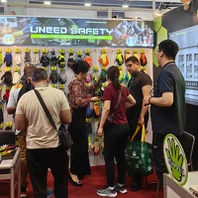
Cut-resistant gloves are generally divided into two types, one is used for industrial production protection, commonly used in food engineering, biological engineering, electronics industry, mechanical protection, glass industry, etc.; the other is police-type protective gloves, used for Disaster relief, fire rescue, etc.
Covers the four mechanical risks of wear resistance, cut resistance, tear resistance and stab resistance. Different industries have different protection points, and the choice of cut-resistant gloves is also different.
1. Aramid: Aramid is an aromatic polyamide product. The fiber is yellow, strong, light, and flexible. It is 5 times stronger than steel of the same weight. It is flame-resistant and will not melt at high temperatures. Therefore, it is more suitable for high-temperature workers, such as: metal smelting, industrial electric welding, glass processing, etc.
2. High-strength polyethylene fiber: tough and light, good fit, good abrasion resistance, low friction coefficient, high strength, more than ten times that of steel wire with the same cross-section. It is mostly used for workers in high-strength industries, such as metal processing, body assembly, stamping operations, etc.
3. Steel wire and polyester fiber weaving: Steel wire gloves have the highest cutting resistance, and are suitable for manpower operation. In addition to being used in the food processing industry, they are also used to prevent animal bites.
When choosing cut-resistant gloves, you must be aware of the restrictions on the use of gloves, read the instructions carefully or consult the sales staff, in case the selected gloves are not suitable for your industry. For example, cut-proof gloves are not completely cut-proof, and are only suitable for manually operated knives; wire cut-proof gloves are not suitable for defending workers to build thorny flowers and plants, because the thorns may pass through dense steel wire holes to stab their hands; engaged in food When the processing industry chooses cut-resistant gloves, it must be confirmed whether there are food-grade certification marks, etc.
Cut-resistant gloves are often in contact with sharp objects during use, and holes may appear. Once the hole exceeds 1 square centimeter, it needs to be repaired or replaced immediately to avoid threatening the safety of the user.