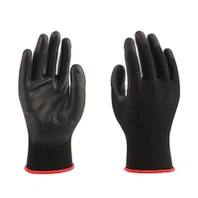
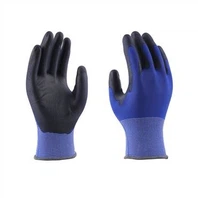
Hey there! As a supplier of Nitrile Coated Gloves, I often get asked about the grip strength of these gloves. It's a crucial factor, especially in various industries where a good grip can mean the difference between a successful task and a potentially dangerous situation.
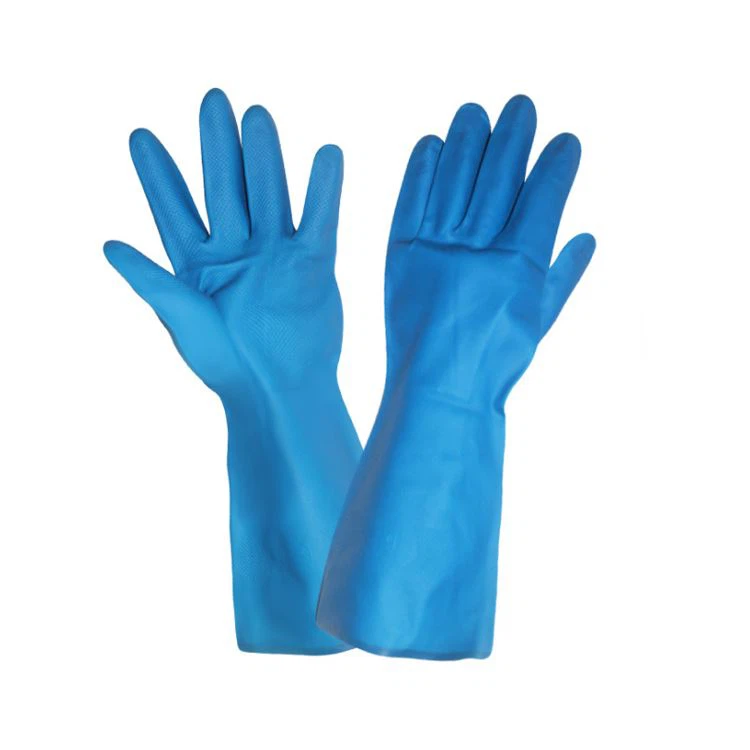

Let's start by understanding what nitrile is. Nitrile is a synthetic rubber material known for its excellent chemical resistance, puncture resistance, and durability. When it comes to grip strength, nitrile-coated gloves have some unique properties that set them apart.
The grip strength of nitrile-coated gloves is mainly determined by two things: the texture of the nitrile coating and the type of surface it's interacting with. The texture of the nitrile coating can vary from smooth to highly textured. Smooth nitrile coatings are great for tasks that require a delicate touch, like handling small parts or working in a clean environment. They provide a certain level of grip, but it's more about precision than brute force.
On the other hand, textured nitrile coatings are designed for tasks that demand a stronger grip. These textures can be in the form of patterns, bumps, or ridges. The patterns are strategically designed to increase the surface area of contact between the glove and the object being held. For example, a diamond pattern on the palm and fingers of a nitrile-coated glove can significantly enhance grip, especially when handling wet or oily objects.
When it comes to different surfaces, nitrile-coated gloves perform differently. On dry surfaces, the grip is generally excellent. The nitrile material has a natural stickiness that allows it to hold onto objects firmly. However, in wet or oily conditions, the grip can be a bit more challenging. That's where the texture of the coating becomes even more important. Textured nitrile gloves can channel away liquids, reducing the risk of slippage.
Let's talk about some real-world applications. In the industrial sector, workers often need to handle heavy machinery, tools, and materials. Industrial Nitrile Gloves are specifically designed to provide maximum grip in these environments. They are usually made with a thick, textured nitrile coating that can withstand the rigors of daily use. Whether it's gripping a slippery metal pipe or a greasy tool, these gloves offer the reliability and strength needed to get the job done safely.
In the food processing industry, grip strength is also crucial. Workers need to handle food products without dropping them or contaminating them. Microfoam Nitrile Gloves are a popular choice in this industry. They have a unique microfoam texture that provides an excellent grip, even when the hands are wet. The microfoam also allows for better breathability, which is important for long hours of work.
Now, let's get into the science behind grip strength. Grip strength is measured in pounds or kilograms. It's the amount of force that a person can exert when holding an object. When wearing nitrile-coated gloves, the grip strength can be affected by several factors. The thickness of the nitrile coating, the fit of the glove, and the dexterity of the wearer all play a role.
A thicker nitrile coating generally provides more grip, but it can also reduce dexterity. That's why it's important to find the right balance between grip strength and flexibility. The fit of the glove is also crucial. A glove that's too loose will not provide a good grip, while a glove that's too tight can be uncomfortable and restrict movement.
Dexterity is another important factor. Even with a strong grip, if the wearer can't move their fingers freely, it can be difficult to perform tasks accurately. That's why many nitrile-coated gloves are designed with a pre-curved shape and elastic cuffs to ensure a comfortable fit and maximum dexterity.
As a supplier of Nitrile Coated Gloves, I understand the importance of providing high-quality products that meet the needs of our customers. That's why we offer a wide range of nitrile-coated gloves with different textures, thicknesses, and sizes. Whether you're looking for gloves for industrial use, food processing, or any other application, we have the right product for you.
If you're interested in learning more about our Nitrile Coated Gloves or if you have any questions about grip strength or other features, feel free to reach out to us. We're here to help you find the perfect gloves for your needs. Whether you're a small business or a large corporation, we can work with you to provide the best solution at a competitive price.
In conclusion, the grip strength of nitrile-coated gloves is a complex but important factor. It depends on the texture of the coating, the type of surface, and the fit and dexterity of the glove. By understanding these factors, you can choose the right nitrile-coated gloves for your specific application. So, if you're in the market for high-quality nitrile-coated gloves, don't hesitate to contact us. We're ready to assist you in finding the perfect gloves to keep you safe and productive.
References
- "Hand Protection in the Workplace: A Guide to Selecting the Right Gloves," Occupational Safety and Health Administration
- "The Science of Grip: How Gloves Enhance Performance," Journal of Industrial Ergonomics