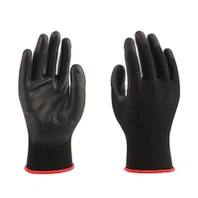
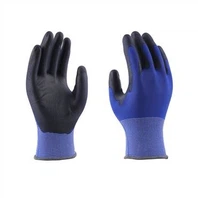
Hey there! As a supplier of Foam Nitrile Coated Gloves, I often get asked about the difference between foam nitrile coated gloves with and without liners. So, I thought I'd write this blog to break it down for you in a simple and easy - to - understand way.
Let's start with the basics. Foam nitrile coated gloves are super popular in various industries because of their excellent grip, chemical resistance, and durability. But when it comes to liners, things can get a bit confusing.
Gloves without Liners
First off, let's talk about foam nitrile coated gloves without liners. These gloves are pretty straightforward. The foam nitrile coating is directly applied to the glove base material, which is usually some kind of synthetic fiber or blend.
One of the biggest advantages of these liner - less gloves is their breathability. Since there's no extra layer inside, air can circulate more freely around your hand. This means your hands are less likely to get sweaty and uncomfortable during long - term use. For example, if you're working in a hot environment like a foundry or a kitchen, where your hands are constantly moving and generating heat, liner - less foam nitrile coated gloves can be a great choice.
They're also more flexible. Without the liner adding extra bulk, your fingers can move more naturally. This is crucial for tasks that require fine motor skills, like electronics assembly or jewelry making. You can pick up small parts with ease and perform delicate operations without feeling restricted.
In terms of cost, gloves without liners are generally more affordable. The manufacturing process is simpler because there's no need to add an additional liner layer. So, if you're on a tight budget and need a large quantity of gloves for general - purpose work, these could be the way to go.
However, they do have some drawbacks. They offer less insulation. In cold environments, your hands might get cold quickly. Also, they may not provide as much padding as gloves with liners. So, if you're doing heavy - duty work that involves a lot of impact or vibration, like construction or automotive repair, your hands might feel the strain more.
Gloves with Liners
Now, let's move on to foam nitrile coated gloves with liners. These gloves have an extra layer of material inside the glove, which can be made of various substances like cotton, polyester, or a blend of both.
The liner adds a lot of benefits. One of the main ones is insulation. If you're working in a cold environment, like a freezer or an outdoor winter job, the liner helps keep your hands warm. It acts as a barrier between your skin and the cold air, reducing the risk of frostbite and discomfort.


Padding is another big plus. The liner provides an extra cushioning effect, which is great for jobs that involve repetitive motions or handling heavy objects. For instance, if you're a warehouse worker constantly lifting and moving boxes, the liner can absorb some of the shock and reduce the stress on your hands and wrists.
Gloves with liners also offer better protection against abrasion. The liner can prevent the inner surface of the glove from rubbing against your skin, reducing the chances of blisters and irritation. This is especially important for jobs where your hands are in constant contact with rough surfaces, like landscaping or carpentry.
But there are also some downsides. As mentioned earlier, they're less breathable. The liner traps heat and moisture, which can make your hands feel sweaty and sticky. This can be a real problem if you're working in a warm environment.
They're also more expensive. The additional liner material and the extra manufacturing steps increase the cost. And they're a bit bulkier, which can reduce dexterity. If you need to perform tasks that require very precise finger movements, you might find these gloves a bit cumbersome.
Comparison in Different Industries
Let's take a look at how these two types of gloves perform in different industries:
Food Industry
In the food industry, hygiene is of utmost importance. Foam nitrile coated gloves without liners are often preferred because they're easier to clean and sanitize. The smooth inner surface doesn't trap food particles or bacteria as easily as a liner would. Also, the breathability is a plus, as workers often have to wear gloves for long periods while handling food at room temperature. You can check out our 13 Gauge Foam Nitrile Coated Gloves, which are great for food handling tasks.
Construction Industry
Construction workers face a variety of challenges, from working in different weather conditions to handling heavy tools. Gloves with liners are more suitable for cold - weather construction work, as they provide insulation. They also offer better padding for tasks like hammering and digging. However, for tasks that require more dexterity, like plumbing or electrical work, liner - less gloves might be a better option. Our Microfoam Nitrile Coated Gloves Water Flushed can be a good choice for general construction use.
Healthcare Industry
In healthcare, both types of gloves have their uses. For procedures that require a high level of dexterity, like suturing or taking blood samples, liner - less foam nitrile coated gloves are often used. They allow for precise movements. But for tasks that involve contact with cold substances or when the hands need extra protection, gloves with liners can be a better option. Our Microfoam Nitrile Coated Gloves can meet different needs in the healthcare setting.
Making the Right Choice
So, how do you decide which type of foam nitrile coated gloves is right for you? It all comes down to your specific work requirements. Consider the following factors:
- Environment: If it's hot, liner - less gloves are better. If it's cold, go for gloves with liners.
- Task: For fine motor skills, liner - less. For heavy - duty or cold - weather tasks, gloves with liners.
- Budget: If you're on a tight budget, liner - less gloves are more cost - effective.
We understand that every customer has unique needs. That's why we offer a wide range of foam nitrile coated gloves, both with and without liners. Whether you're a small business owner looking for affordable gloves for your employees or a large corporation in need of high - quality, specialized gloves, we've got you covered.
If you're interested in learning more about our products or want to discuss your specific glove requirements, feel free to reach out. We're always happy to help you find the perfect gloves for your work.
References
- "Hand Protection in the Workplace" - Occupational Safety and Health Administration
- "Gloves: A Guide to Selection and Use" - National Institute for Occupational Safety and Health