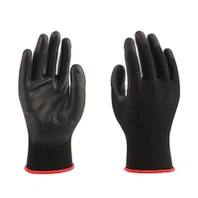
Bricklaying is a physical and demanding trade that requires both skill and the right tools. Among these tools, personal protective equipment (PPE), especially work gloves, plays a crucial role. One type of glove that often comes into the conversation is nitrile coated work gloves. As a supplier of Nitrile Coated Work Gloves, I'm often asked whether these gloves are suitable for bricklaying. In this blog, I'll explore the properties of nitrile coated work gloves and evaluate their viability for bricklaying tasks.
Understanding Nitrile Coated Work Gloves
Nitrile coated work gloves are designed to offer a combination of protection and dexterity. The nitrile coating is a synthetic rubber that provides several key benefits. Firstly, it offers excellent resistance to oils and chemicals. This is particularly useful in industrial settings where workers may come into contact with various lubricants, solvents, or cleaning agents. For example, in a manufacturing plant, workers handling machinery parts lubricated with oil can rely on nitrile coated gloves to keep their hands clean and protected. Our Nitrile Oil Proof Safety Gloves are a prime example of gloves that excel in this area.
Secondly, nitrile is known for its high puncture resistance. Compared to latex or vinyl gloves, nitrile coated gloves can withstand sharp objects better without tearing. This is important in any work environment where there is a risk of cuts or punctures, such as handling metal sheets or wooden boards with nails. In addition, nitrile has good grip properties. Whether the surface is wet or dry, nitrile coated gloves can provide a firm hold on objects, reducing the risk of dropping tools or materials.
The Demands of Bricklaying
Bricklaying involves several physical activities that put specific demands on work gloves. Firstly, bricklayers need to handle heavy bricks and blocks continuously. The gloves need to provide sufficient protection against the weight and potential abrasion. As bricks are rough and can cause skin irritation over time, gloves need to act as a barrier between the hands and the bricks.
Secondly, bricklayers use trowels to spread mortar. Mortar is a mixture of cement, sand, and water, and it can be caustic and irritating to the skin. Prolonged exposure to mortar can cause skin problems such as dermatitis. Therefore, work gloves need to resist the penetration of mortar and protect the hands from its harmful effects.
Another important aspect is the need for dexterity. Bricklaying requires precise movements, such as placing bricks accurately and smoothing the mortar joints. Gloves need to allow the wearer to have a good sense of touch and control over their tools.
Evaluating Nitrile Coated Work Gloves for Bricklaying
Protection against Abrasion
Nitrile coated work gloves generally offer good protection against abrasion. The nitrile coating acts as a shield, reducing the direct contact between the hands and the rough surface of the bricks. The durability of the nitrile coating ensures that the gloves can withstand the repeated friction and rubbing that occurs during bricklaying. For example, our Nitrile Coated Work Gloves are designed with a thick and resilient nitrile layer that can handle the abrasive nature of bricks and mortar.
Chemical Resistance to Mortar
As mentioned earlier, mortar is caustic and can cause skin damage. Nitrile is resistant to many chemicals, including some of the components commonly found in mortar. This means that nitrile coated work gloves can provide a certain level of protection against the caustic effects of mortar. However, it's important to note that the effectiveness of the protection may depend on the type of nitrile coating and the concentration of the mortar. In some cases, extended or repeated exposure to highly concentrated mortar may still cause some degradation of the nitrile coating.
Grip and Dexterity
One of the advantages of nitrile coated work gloves is their grip. As bricklayers need to handle bricks and trowels, a good grip is essential for safety and efficiency. The nitrile coating provides a non - slip surface, whether the hands are dry or slightly damp from sweat. This allows bricklayers to hold bricks firmly without the risk of dropping them.
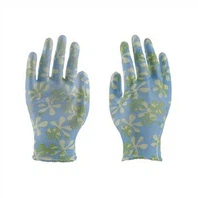
In terms of dexterity, nitrile coated work gloves can offer a reasonable level of flexibility. Modern manufacturing techniques have allowed for the production of thinner and more flexible nitrile coatings, which enable workers to perform delicate tasks such as adjusting the position of bricks or using a trowel to create fine mortar joints. Our Smooth Nitrile Garden Glove, while not specifically designed for bricklaying, showcases the level of dexterity that nitrile coated gloves can offer, with its smooth and flexible nitrile coating.
Limitations of Nitrile Coated Work Gloves for Bricklaying
While nitrile coated work gloves have many advantages for bricklaying, they also have some limitations. One potential issue is breathability. Nitrile is a synthetic material that may not allow the hands to breathe as well as some natural fiber - based gloves. This can lead to sweating and discomfort, especially during long - hours of work. In hot and humid conditions, the lack of breathability can make the gloves feel sticky and unpleasant to wear.
Another limitation is the cost. Nitrile coated work gloves are generally more expensive than some other types of work gloves. For some bricklaying contractors or individual workers on a tight budget, the higher cost may be a deterrent.
Conclusion
In conclusion, nitrile coated work gloves can be a viable option for bricklaying. They offer good protection against abrasion and some chemical resistance to mortar, along with excellent grip and a reasonable level of dexterity. However, their limitations in breathability and cost need to be considered.
If you're in the bricklaying industry and are looking for high - quality nitrile coated work gloves, we're here to help. We offer a wide range of nitrile coated gloves that are designed to meet the specific needs of different work environments. Whether you need gloves for heavy - duty bricklaying or more delicate tasks, our products can provide the protection and performance you require. Reach out to us to start a conversation about your glove requirements. You'll find our staff knowledgeable and eager to assist in finding the perfect solution for your work needs.


References
- ASTM International standards for protective gloves in construction work.
- Industry research reports on the performance of nitrile and other glove materials.
- Safety data sheets provided by manufacturers of mortar and related construction materials.